
When anxiety starts making the decisions
Anxiety rarely arrives all at once. More often it shows up as a series of small, sensible-looking adjustments, like taking the longer route to avoid the crowded metro, rereading an email four times before you send it, or checking your phone for a message that might mean something has gone wrong. Each choice makes sense on its own, and together they can shrink a life without anyone, including you, quite noticing.
Your body often reacts before your mind has caught up, with a racing heart or a stomach that won't settle, and even when part of you knows the danger is unlikely, the rest of you behaves as though it is right in front of you. Living with that day after day is tiring in a way that can be hard to explain to people who haven't felt it.
Forms of anxiety we work with
Anxiety takes different shapes, and naming the one you are dealing with is often the first useful thing that happens in therapy.
Panic attacks
A first panic attack can feel like a medical emergency, and plenty of people end up at the emergency room convinced something is badly wrong with their heart. After that, the fear of the next attack often becomes the bigger problem. People start avoiding the metro, crowded supermarkets or long meetings in case it happens there. Therapy helps you understand what your body is doing during an attack and, step by step, take those places back.
Social anxiety
Social anxiety is a steady worry about being judged, saying the wrong thing or being noticed for the wrong reasons. For many internationals it comes with an extra layer, since speaking up in Danish, or even in English at a Danish workplace, can turn an ordinary meeting or dinner party into something that feels like a test you could fail.
Health anxiety
If you find yourself searching symptoms late at night, booking appointments for a reassurance that wears off within a day, or scanning your body for signs that something is wrong, health anxiety may be running more of your life than you would like. Therapy looks at the cycle of worry, checking and short-lived relief that keeps it going.
OCD and phobias
Intrusive thoughts, rituals that have to be done in a certain way, or a fear of something specific like flying, needles or dogs can take up hours of a day and start to shape your plans. With a therapist trained in CBT, this work usually involves gradual and carefully paced exposure, so you face what you have been avoiding at a speed that feels manageable.
Anxiety and life abroad
Moving countries strips away many of the small certainties that usually keep anxiety in check. You may not yet know how the healthcare system works or which unwritten rules you are breaking at work, and the people who used to catch you when things went wrong are often a flight away. Anxiety that was manageable at home can become louder here, and sometimes it appears for the first time.
Søren Kierkegaard, who spent most of his life walking these same Copenhagen streets, described anxiety as "the dizziness of freedom." Many of our clients recognise something of themselves in that phrase, having arrived in a new life with plenty of choices and very few familiar footholds. Talking it through in your own language, with a therapist who knows what building a life abroad involves, can make that first conversation much easier to start.
How therapy for anxiety works
Most anxiety is kept alive by the things we do to feel safe. Avoiding the feared situation, asking for reassurance or mentally checking that everything is fine all bring relief in the moment, and that relief quietly teaches your brain the danger was real. Therapy usually begins by mapping that cycle with you, looking at what sets the anxiety off, what you fear will happen and what you tend to do next.
Where the work goes from there depends on you and on the therapist you choose. Cognitive Behavioural Therapy (CBT) is one of the most thoroughly researched approaches for anxiety. It tends to be structured and practical, often with small experiments between sessions to test what happens when you do the thing you have been avoiding. Acceptance and Commitment Therapy (ACT) focuses on making room for anxious thoughts and feelings so they have less say over where you go and what you do, and on getting clear about what you want your life to be organised around instead. Some of our therapists also work in a more exploratory way, looking at where the anxiety comes from and what it may once have protected you from.
You do not have to wait until you feel ready, or fearless, to begin. The intro call is a low-stakes way to ask a therapist how they would approach what you are dealing with.
Frequently asked questions
Can I use a referral from my doctor?
No. We are a private clinic, so we cannot accept GP referrals, and sessions are not covered by the public health insurance (sygesikring). You can book directly with any of our therapists without seeing your doctor first. Some private health insurance plans reimburse therapy, so it is worth checking your policy.
How do I know if it's anxiety or just stress?
The two overlap a great deal, and you do not need a diagnosis or a label to start. If worry, tension or avoidance are getting in the way of your work, your sleep or your relationships, that is reason enough to talk to someone. You can use the free intro call to ask whether therapy makes sense for what you are going through.
How many sessions will I need?
It depends on what you are working on. Focused work on panic attacks or a specific phobia is often a shorter course, while anxiety tied to long-standing patterns usually takes more time. Your therapist will talk this through with you early on and check in with you as the work goes on.
Can I combine therapy with medication?
Yes, many people do. Our therapists do not prescribe medication, so questions about it belong with your doctor or a psychiatrist, and your therapist can work alongside whatever treatment you already have.
Can I have sessions online?
Yes. Every therapist on this page also offers online sessions, at the same price as sessions at our practice.
What if I'm in crisis?
We are not an emergency service and cannot offer same-day crisis support. If your life or someone else's is in danger, call 112. For an acute mental health crisis in the Capital Region, call 1813. If you are having thoughts of suicide, you can call Livslinien on 70 201 201.
Practical information
Therapy for anxiety is available with Gabriela Palú, Dániel Ványi, Lauren O'Hagan, Andrea Hörandner, Annalisa Jelmoni, Melanie Bühne and Ariel Andersen. Their approaches vary, so you can choose between more structured, practical work and a more exploratory style, depending on what you are looking for.
Sessions are available in English, Portuguese, Hungarian, German, Italian and Danish, depending on the therapist, either at our practice at Kompagnistræde 16, 2nd floor, 1208 København K, near Gammel Strand, or online.
Individual sessions last 50 minutes and cost 950–1,150 DKK, depending on the therapist. Online sessions cost the same. Cancellation is free up to 24 hours before your session. View current prices.
We are a private practice and cannot accept GP referrals.
Every new client starts with a free 15-minute intro call. You can ask how a therapist works with anxiety, talk about what you would like to change and see whether the two of you are a good fit, all before committing to a first session.
Terapeutas especializados nisso


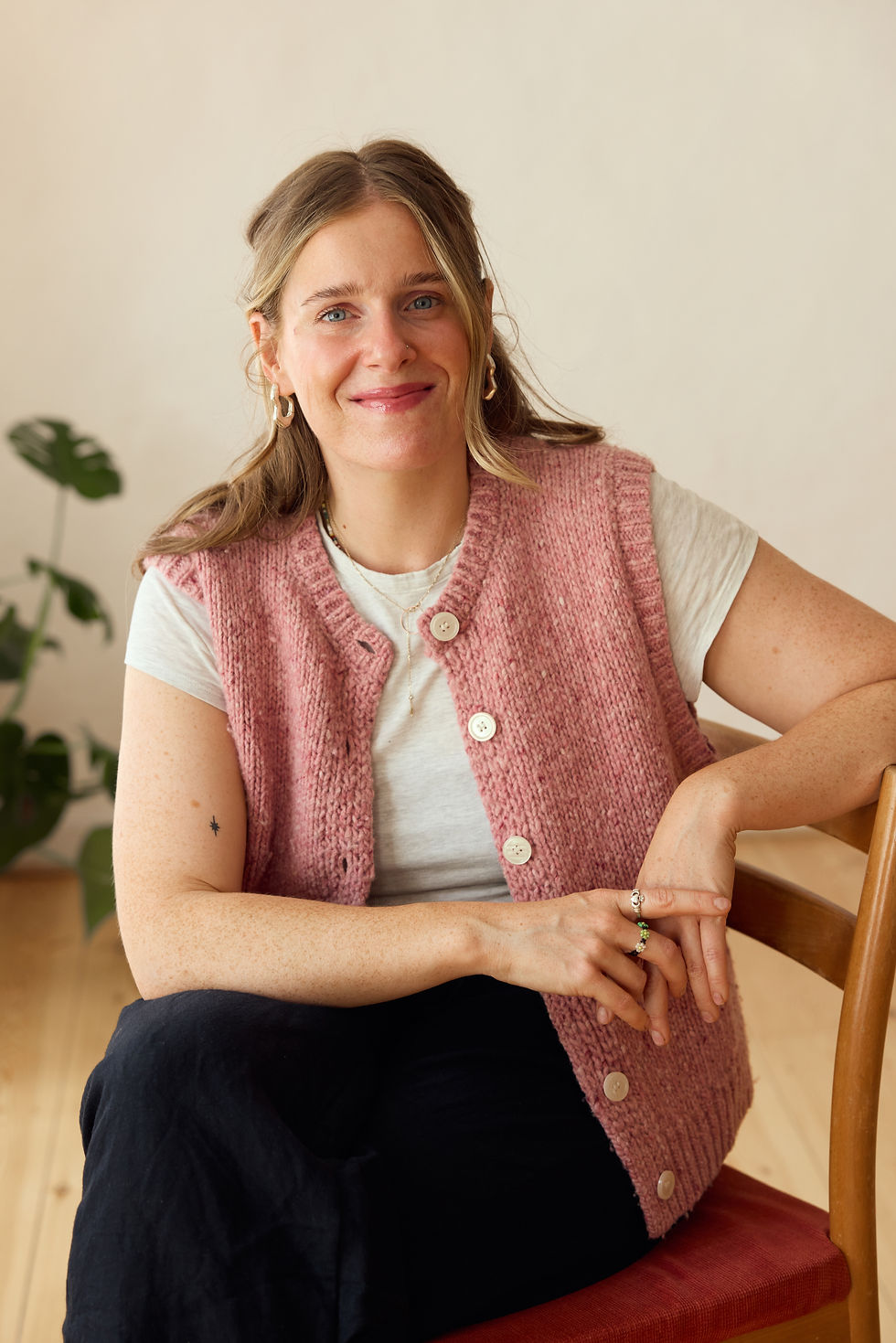
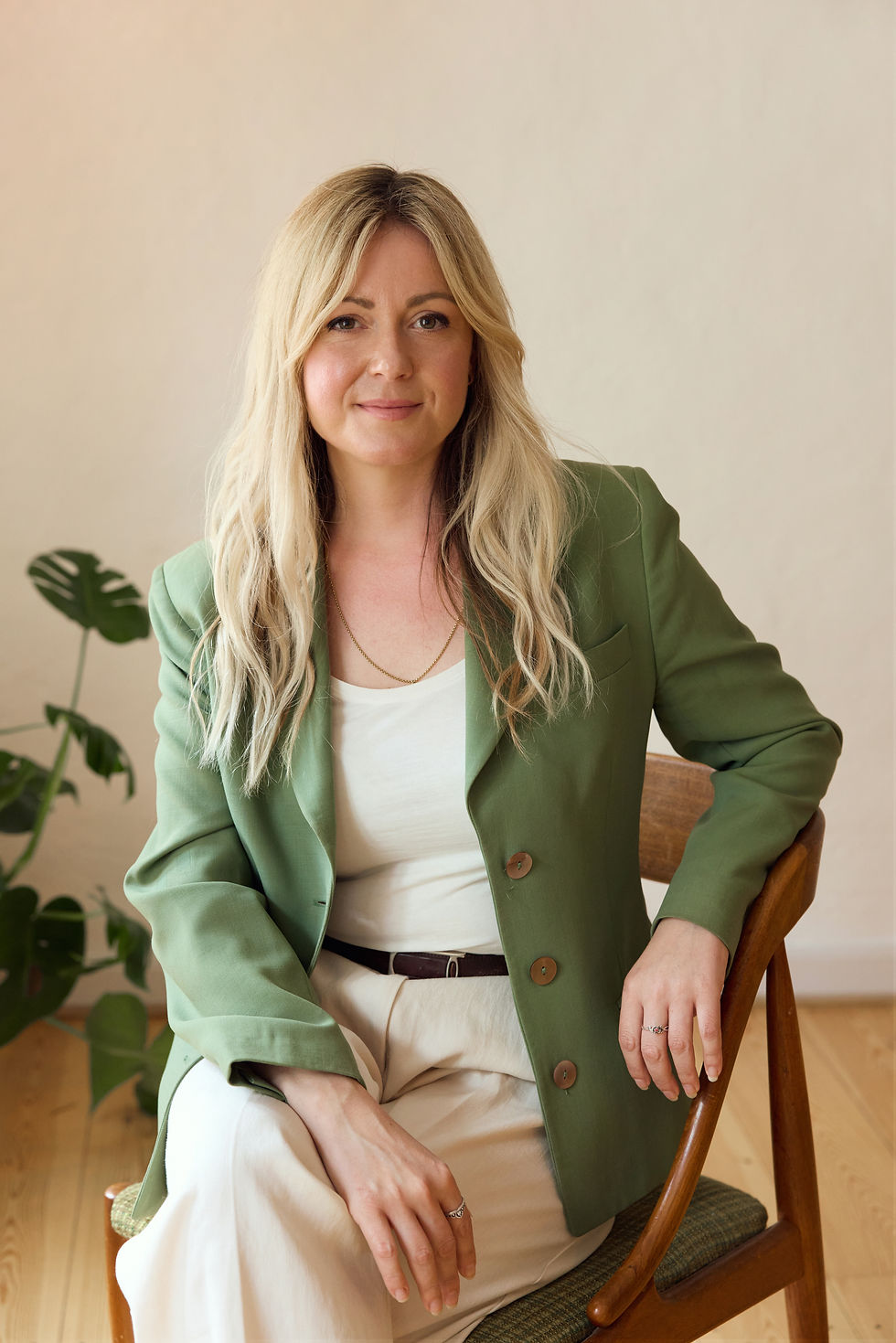
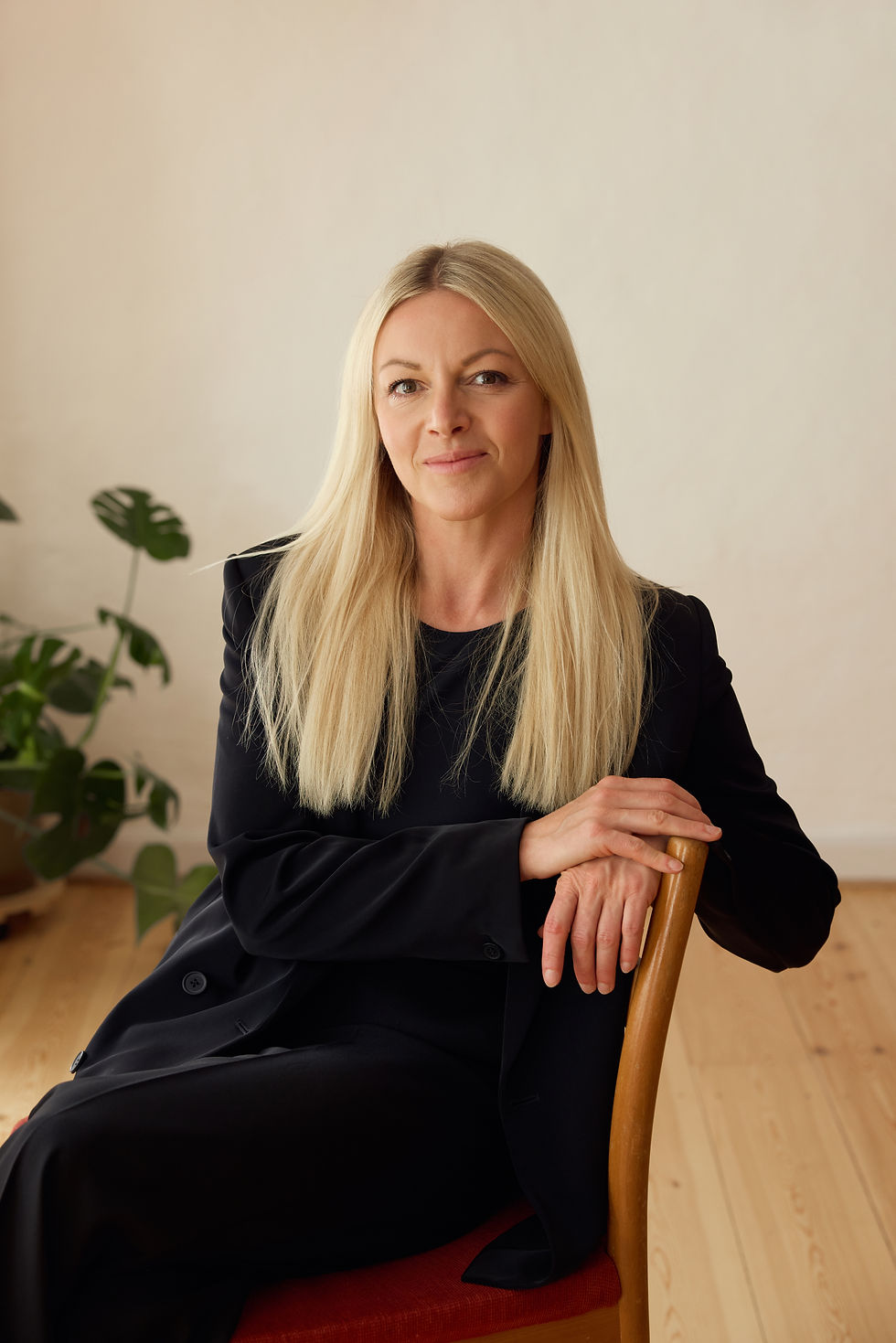
Andrea Hörandner
Mestrado em Artes, Psicoterapeuta Integrativa com Abordagem Corporal, Mestrado em Prática Profissional