


English-speaking Therapy in Copenhagen
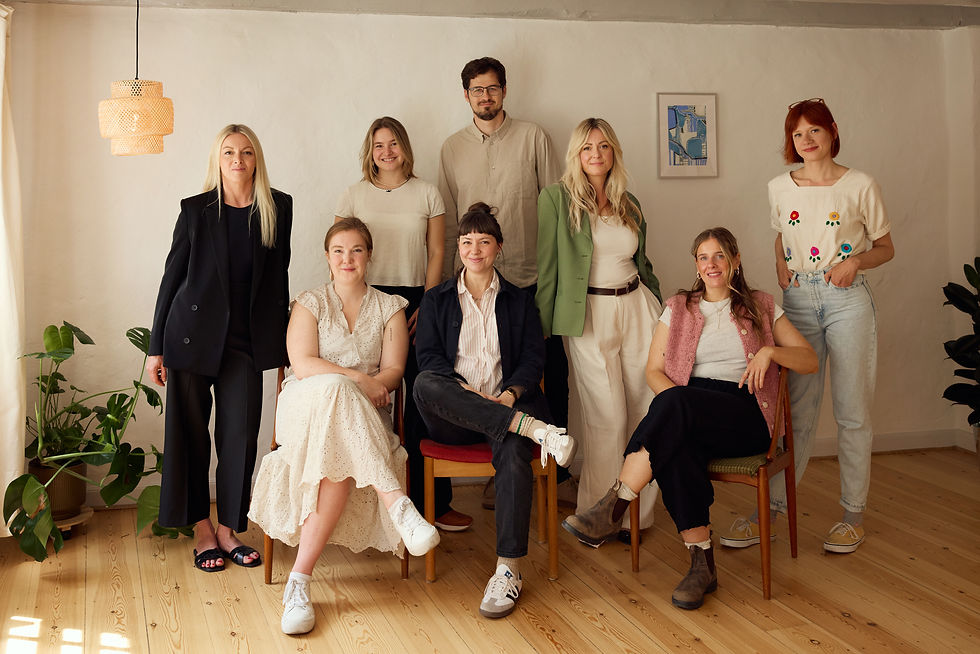
Village Therapy is a group of psychologists and psychotherapists working together near Gammel Strand. Many of us moved to Denmark from another country, so we know what it's like to fill in forms you can't fully read, miss birthdays back home, and slowly figure out how things work here. People rarely come to therapy because of those things alone. Having been through them ourselves does mean you won't have to explain from scratch what it's like to live here as an outsider.
Support For Life in Denmark
Moving to another country changes ordinary days in ways that are hard to predict. Someone who felt capable at work back home might read a letter from the kommune three times and still not be sure what it says. Someone who was always the funny one in their group might find that their jokes don't work in Danish. In her memoir Lost in Translation, Eva Hoffman writes about emigrating as a teenager and finding that words in her new language didn't feel connected to the things they named. Many of our clients describe something similar, even if they haven't put it that way.
After a while it can be hard to tell what's actually causing the trouble. Feeling low in February might have to do with the dark, with work, with being far from family, or with something older that the move made harder to ignore. Sorting that out is often the first useful thing we do together.
Couples often settle in at different speeds. One partner might be biking to work in the November rain and feeling surprisingly happy, while the other is still waiting for Copenhagen to feel like home. Because the decision to move was usually made together, that difference can be hard to talk about without someone feeling blamed.
Individual Therapy
Many people wait until things are really bad before they reach out, partly because it's hard to justify the time and money while you're still getting through the week. You can come in earlier than that. People see us for anxiety, stress, grief, burnout, low mood, or a general unhappiness they can't quite explain. The first sessions are usually about getting a clearer picture of what's going on and what you'd like to change. From there, your therapist works with you on changes that fit your life.
Couples therapy in Copenhagen
Most couples who come to us are having the same argument over and over. The topic might be the dishwasher or whose turn it was to book the babysitter. Over time, the way the argument plays out becomes familiar: one person pushes harder, the other pulls back, and both end up feeling alone. Couples therapy helps you see that pattern clearly enough to change it, and to understand what each of you is reacting to. We also work with parenting, sex and closeness, rebuilding trust, cultural differences, and big decisions like whether to stay in Denmark.
Therapy for Children
Young children are much better at showing how they feel than telling you. A three-year-old who stops sleeping through the night after starting børnehave, or a six-year-old who has become clingy since a move, is usually trying to say something in the only way they can. Our child psychologist works through play, drawing, and other creative activities. Parents are part of the process, so you go home with practical ideas for supporting your child.
Links



Our Central Copenhagen Practice
A quiet second floor near Gammel Strand
Private, Comfortable Rooms
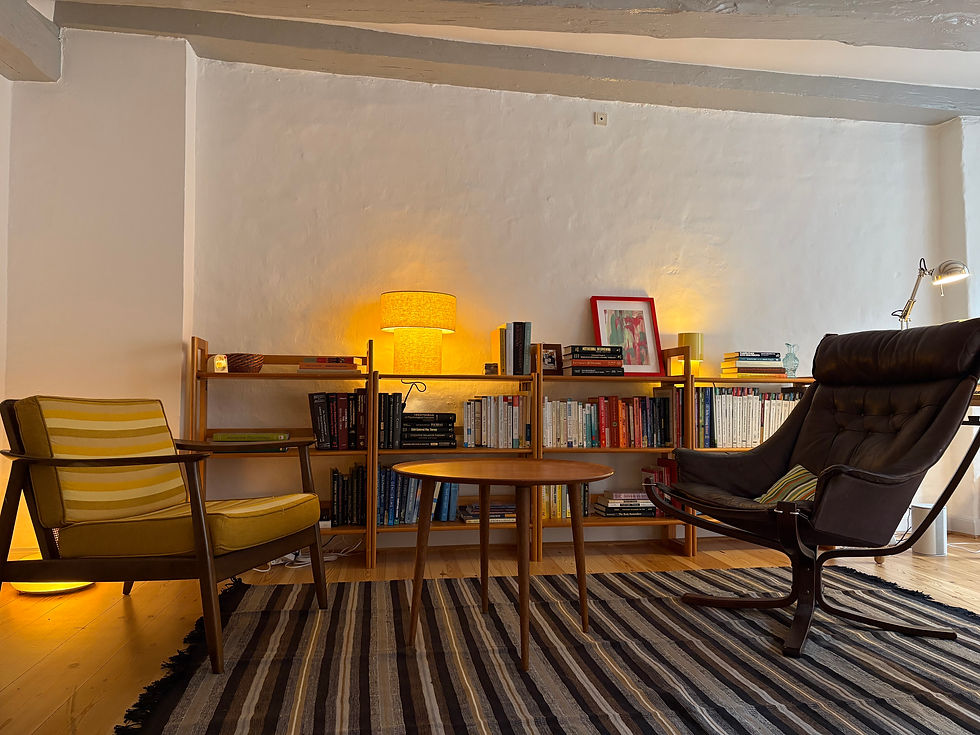
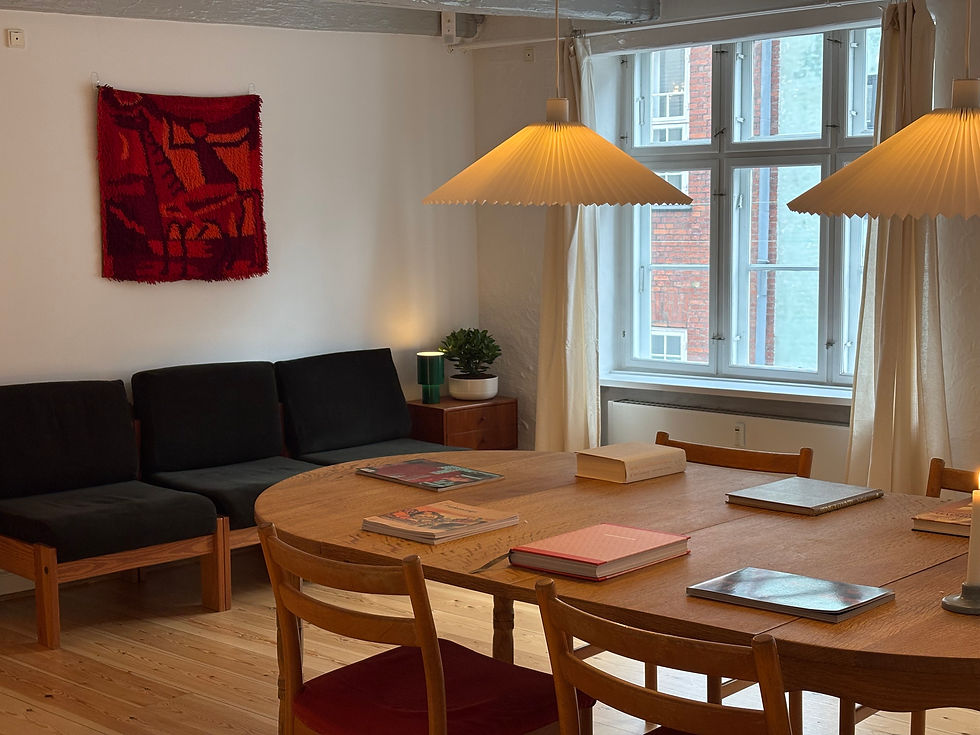
Our practice is on the second floor of Kompagnistræde 16, a couple of minutes from the canal at Gammel Strand. In The Poetics of Space, the philosopher Gaston Bachelard wrote that a home shelters daydreaming, and we kept that idea in mind when we set up the rooms. We wanted them to feel like a comfortable living room, with lamps, soft chairs, and shelves full of books. Most people find it easier to say difficult things in a room that feels lived in.
See our contact page for directions.
Therapy in your language
There's a version of you that mostly comes out in your first language. It knows which expressions to use and can find the right word for a feeling without stopping to think. When Jhumpa Lahiri moved to Rome and started writing in Italian, she described feeling more vulnerable in her new language, and many people in therapy notice the same thing. It matters most when the subject is something like shame or grief, since those feelings are often tied to the words we learned as children. Our team offers sessions in English, German, Danish, Italian, Croatian, Portuguese, and Hungarian. Languages vary by therapist, and each profile lists who speaks what.

Get In Touch
We’re here to help you take the first step
Frequently asked questions
Frequently Asked Questions
Finding a therapist who feels right for you
You don't need to know the difference between CBT and psychodynamic therapy to get started. It helps more to know roughly what you'd like help with and which language you'd like to speak. After that, pay attention to how it feels to talk with someone. Research on psychotherapy keeps finding that the relationship between client and therapist is one of the strongest predictors of how well therapy goes, so the free intro call is worth taking seriously. Read a few profiles and book a call or two. If you'd like a suggestion, use the form below.
What Our Clients Say
2026
I can’t say enough good things about Ariel and how much she helped me. I felt heard and it meant so much.
David
2026
I began working with Ariel at a time when I was heading into a real crisis in my personal life. She brought a rare combination of empathy and professionalism to every session. She paid attention not just to what I said but to how I said it, and she met me there. Just as importantly, she didn’t let me stay stuck. She gently guided me toward real, meaningful progress, and I’m genuinely grateful for the difference she made during one of the hardest periods of my life. I’d recommend both Ariel and Village Therapy to anyone looking for thoughtful, caring support.
Brian
2026
"Working with Melanie has been really supportive for me. She helped me gain real clarity around my overthinking and anxiety, and gave me practical tools I could actually use in day-to-day moments when things felt overwhelming. Our conversations always left me feeling more grounded and better equipped to handle what came my way. I'm grateful for her guidance and support."