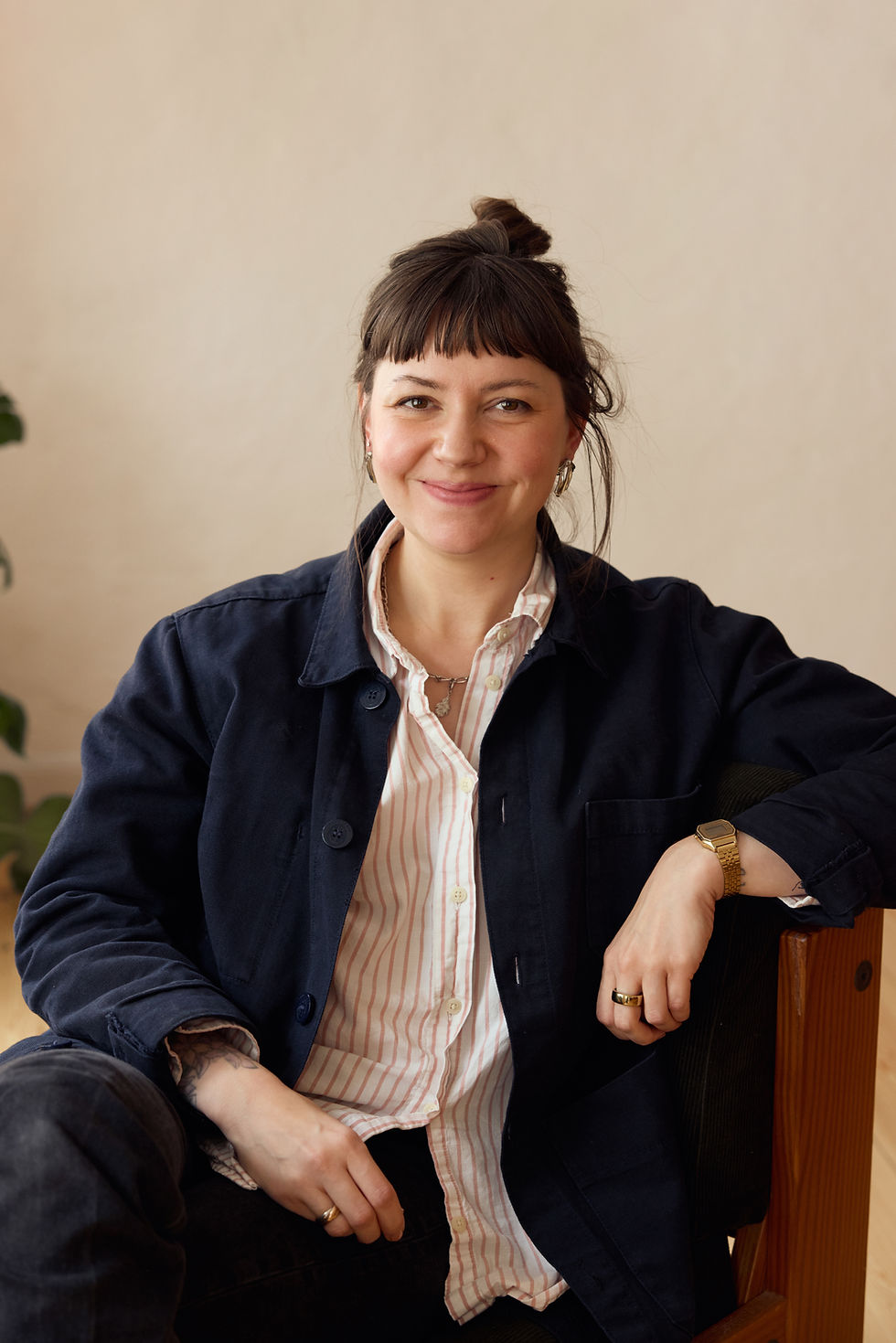
Family Therapy in Copenhagen
Look at the patterns your family has settled into and find steadier ways to talk, disagree and look after one another.

Family therapy in Copenhagen
Every family develops its own way of handling stress. One person gets quiet, another gets louder, someone takes on the job of keeping the peace, and over the years these roles settle into a kind of choreography that everyone performs without ever having rehearsed it. A move abroad, a new baby, a teenager pulling away or a parent getting older can unsettle that arrangement. When it does, the familiar moves stop working, and usually everyone in the house feels it at roughly the same time.
Family therapy gives the people involved a room where they can slow those moments down together and look at what happens between them, with someone present whose job is to keep the conversation from sliding back into its usual grooves.
How family therapy works
Ariel draws on Bowen family systems theory, which treats a family as one emotional unit. When anxiety rises in one person, it tends to travel, and it often comes to rest somewhere predictable: a child who becomes the focus of everyone's worry, two family members who draw closer and leave a third on the outside, or a distance that opens up because closeness has started to feel risky. Murray Bowen called these patterns triangles and emotional cutoff, and much of the work involves learning to notice them while they are happening.
A related idea is differentiation, meaning a person's ability to stay connected to the people they love while still thinking and feeling for themselves. In practice this might be a parent who can hear a teenager's anger without matching it, or an adult who can visit home for Christmas without slipping back into the role they had at fourteen. As each person finds a little more of that steadiness, the whole family usually becomes calmer to live in.
Bowen also paid close attention to how patterns pass from one generation to the next. Together you may sketch a genogram, a family tree that records relationships, losses and turning points along with names and dates. It can show how the way your family handles conflict or grief echoes something from your parents' or grandparents' lives. For families who have moved countries, that history is often scattered across several languages and places, and seeing it on one page can be surprisingly clarifying.
What families bring to therapy
Arguments at home that keep returning to the same place
A child or teenager who has become the focus of the family's worry
Adjusting after a move to Denmark, especially when family members are settling in at different speeds
Separation, divorce, or building a new blended family
Grief, illness, or caring for an ageing parent
Adult children and parents who want to repair a strained relationship
Who comes to sessions
Family therapy is open to families with children of any age, including adult children and their parents. Who attends depends on what you want help with. Sometimes the whole household comes. Other times it makes more sense to begin with the parents, or with two family members, and to invite others in later. You don't need to have worked this out before getting in touch, and it's one of the first things Ariel will talk through with you on the free intro call.
Family life far from home
Living abroad changes the shape of a family. Grandparents who once helped with school pickups are now a video call away, children may be growing up in a language their parents are still learning, and every holiday involves some negotiation between two or three sets of traditions. When a family moved for one person's job, the move can also shift who feels lonely, who feels responsible, and who holds things together. These pressures are common, and they are easier to talk about with someone who understands what it is like to build family life a long way from where you started. Ariel moved to Copenhagen from the US and is raising her own family here.
Practical information
Therapist: Ariel Andersen, psychotherapist MPF, with a master's degree in Couple and Family Therapy from Seattle University
Session length and fee: 50 minutes, 1,500 DKK
Language: English
Location: Kompagnistræde 16, 2nd floor, 1208 København K, near Gammel Strand, or online
Payment: by MobilePay or bank transfer after the session
Cancellation: free up to 24 hours before your appointment
Referrals and insurance: Couples and family therapy is not subsidized in the public system or by insurance.
Frequently asked questions
Does the whole family need to come? No. Change in one part of a family tends to ripple through the rest, which is one of the central ideas in Bowen's work. Many families start with one or two people and include others as the work develops.
Can we come if our children are very young? Yes. With young children, Ariel may meet with the parents first and then plan sessions that suit the children's ages.
How is family therapy different from child therapy? In child therapy, the sessions centre on your child, and parents are involved alongside. In family therapy, the relationships between family members are the focus. If you are unsure which fits your situation, ask during the intro call. For difficulties between two partners, see couples therapy.
Can adult siblings, or adult children and their parents, come together? Yes. Some of the most useful family work happens between adults who have known each other all their lives and still find certain conversations impossible.
How many sessions will we need? It depends on what you bring and how many people are involved. Ariel will talk with you about this early on and check in regularly about how things are going.
Take the next step
Book a free 15-minute introductory call with Ariel to talk about your family and whether family therapy is a good place to start.