A space for children to grow, heal and develop through play

Ages: 3-13

Support for children experiencing:
anxiety and excessive worry
frequent meltdowns or emotional overwhelm
school refusal or school stress
friendship or social difficulties
behavioral changes
struggles after big life transitions or international moves
sleep difficulties, separation anxiety, or withdrawal
Children don’t always have the words to explain how they’re feeling.
They show it through behavior, play, emotions, sleep, or physical complaints.
Play therapy helps children feel safer, more regulated, and more understood, while also supporting parents.
You do not need to wait until things become severe before reaching out.
Many families seek support simply because something feels harder than it used to, or because their child seems increasingly anxious, reactive, overwhelmed, or unlike themselves.
Families often seek child therapy when a child:
has big emotions or frequent meltdowns
struggles with anxiety or worries
has difficulty separating from parents
shows behavioral changes
has sleep or eating difficulties
struggles socially
is adjusting to a move or new culture
seems overwhelmed or withdrawn
If you’re unsure whether therapy is needed, that uncertainty alone is a good reason to ask.
Children communicate through play. Therapy often includes:
play-based exploration
emotion identification
coping and regulation tools
building emotional language
strengthening a sense of safety
Parent sessions are often part of the process, not because parents are doing anything wrong, but because children do best when the adults around them feel supported too.
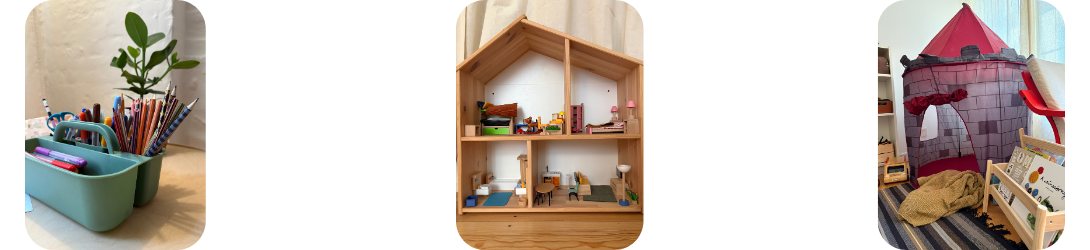
Children growing up abroad often navigate:
language transitions
cultural differences
missing extended family
changes in routine
parents under stress
Therapy gives them a consistent emotional base.
If family stress is affecting everyone, family therapy may also be helpful.
Play therapy always starts with you. Before I meet your child, we spend time together gathering history. Not just milestones and diagnoses, but the context. Moves, languages spoken at home and in daycare, recent changes, sleep patterns, separations, losses, stressors you may not even be sure are relevant.
Parent sessions are a regular part of the work, not an afterthought. These happen alongside your child’s sessions and more often at the beginning. We use them to make sense of what’s showing up, adjust the focus of therapy, and support you in responding differently at home. You are not expected to become a therapist. You are part of the system your child is growing in.
Feedback is ongoing and practical. I won’t interpret every drawing or narrate your child’s inner world in dramatic terms. Instead, I share patterns I’m noticing, shifts in regulation, themes that repeat in play, and what they usually mean developmentally. We talk about what helps, what escalates things, and what to stop worrying about.
Children growing up internationally often carry stress that doesn’t look like stress. I frequently see:
Language fatigue from operating in a second or third language all day
Strong reactions around separation, especially at daycare drop-off
Sleep disruptions after moves, travel, or schedule changes
Aggression or meltdowns after school, when the body finally lets go
Stomach aches, headaches, or other physical complaints with no medical cause
These are not signs of failure or poor parenting. They are common responses to big demands on a small nervous system.
Most parents come in worried they’ve missed something important. They wonder if they caused this, if they waited too long, or if they’re overreacting. There’s often shame mixed in with love. A quiet fear that everyone else seems to be handling this better.
Part of the work is slowing that down. Helping you see what makes sense about your child’s behavior, what’s developmental, what’s stress-related, and where support actually helps. You don’t need to have done this perfectly. You just need a place to think clearly again.
If you’re concerned about your child’s emotional wellbeing, child therapy or play therapy in Copenhagen can help.
You can book a free intro call to talk through what support might be most helpful.
Sessions are each 50 minutes
They take place in our office in Central Copenhagen.
PRICING
800 dkk per session
Edina's FAQ Section
You've got questions. I've got answers.
Many parents consider therapy when they notice changes in their child’s emotions, behaviour, or relationships – such as increased anxiety, withdrawal, aggression, or struggles at school. Sometimes there is a clear triggering event; at other times, there is simply a sense that something isn’t quite right. Trusting your intuition and seeking support early can be a valuable first step.
I work with children from early childhood through pre-adolescence. My approach is always adapted to the child or young person’s needs and developmental stage, using play, creative methods, and conversation as appropriate.
My work is grounded in psychodynamic, mentalisation-focused, and play-based approaches. We focus on understanding the child’s inner emotional world and how past and present relationships shape their feelings, behaviour, and sense of self. I put a strong emphasis on the therapeutic relationship as it unfolds during sessions, as well as collaboration and shared reflection with parents.
Child therapy looks different from adult therapy in several important ways. Children do not always express themselves best through verbal communication, so play, drawing, movement, and other expressive activities are used alongside conversation. These forms of expression help reveal the child’s emotions, experiences, needs, worries, and inner conflicts in a way that feels natural and safe. Psychological support helps the child understand and work through their current challenges and find their inner resources.
Our work begins with a conversation with the parents. This is an opportunity to understand your concerns and talk through your child’s developmental history. The pace is gentle, and there is no expectation that everything needs to be shared straight away.
Sessions are usually held once weekly, as regularity helps children feel safe, supported, and contained. In some situations, the frequency may be adjusted.
Confidentiality is central to building trust in therapy. I share themes and general observations rather than detailed content, unless there are concerns about safety. This balance helps children feel secure while keeping parents appropriately informed.
No. Therapy can be helpful not only in times of crisis or diagnosis, but also during emotional challenges, developmental struggles, or significant life transitions.
Change in therapy often occurs gradually. Parents may notice improved emotional regulation, stronger relationships, increased confidence, or greater self-understanding. Sometimes, change is first seen in subtle shifts rather than dramatic differences.